
2022 Multisectoral Needs Assessment



Over the years, the humanitarian needs overview relied on humanizing cluster-specific needs assessments. Such an approach posed a gap concerning granular Multisectoral data that can establish linkages in sectoral needs and enable an inter-sectoral analysis that reveals underlying drivers of vulnerability. In 2020, The Humanitarian Country Team (HCT) and the donor community expressed the need for a Multisectoral Needs Analysis (MSNA) to support evidence-based planning and decision-making in OPT. The key findings of the MSNA ultimately will contribute to Grand Bargain Commitment 5 on Joint and Impartial needs Assessments, further linking the OPT response strategy with global policy priorities.
- Directly inform joint humanitarian-development response planning in the entirety of the OPT population, including the West Bank (inclusive of East Jerusalem) and Gaza, through the provision of comprehensive, multi-sectoral household data and inter-sectoral analysis.
- Provide a detailed overview of the magnitude and severity of humanitarian needs among crisis-affected populations in the OPT to inform the 2023 HNO and HRP.
- Identify variations in humanitarian needs across geographic areas, population groups, and vulnerability profiles and provide comparable analysis of inter-sectoral needs to inform response prioritisation and strategic planning.
- Assist in informing key instruments and tools prepared by partners (e.g. Vulnerability Assessment Framework).
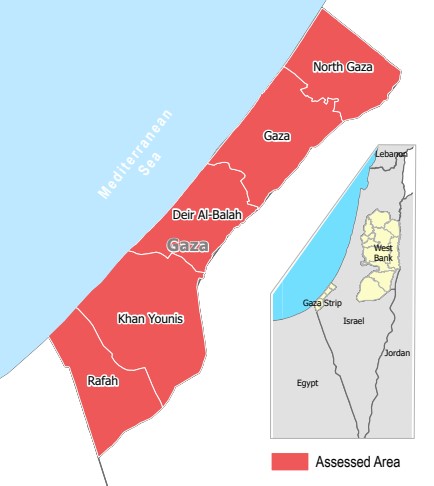
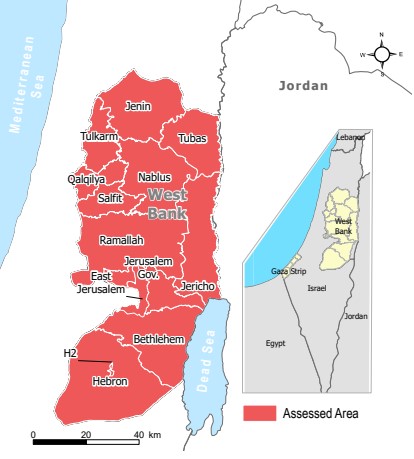
The 2022 MSNA is a nationwide, household-level assessment composed of primary and secondary data collection methods. Primary data collection will consist of a household-level survey conducted across the entirety of the OPT. Reflecting consultations with key partners and experts, it is planned for all surveys to be conducted in-person through face-to-face interviews. However, accounting for access restrictions that may arise as a result of the COVID-19 outbreak or security developments, contingencies are being prepared to adopt a hybrid methodology, consisting of remote interviews conducted by telephone. Remote data collection will be used on a targeted basis, applying only to areas that have become inaccessible. The number of remote interviews is not intended to exceed 20% of the overall survey total. Ultimately, the final sample will be approximately 8,316 interviews, reflecting the total amount of accepted surveys plus a 15% buffer across all strata. Data will be statistically representative at a 95% confidence level and a +/- 9% margin of error for all strata.
Occupied Palestinian Territory. Results were aggregated at a nationwide-level, regional level (e.g. West Bank and Gaza Strip) and also representative of the 57 geographic strata.
8,316 household-level surveys were conducted. Data disaggregated at three levels: (1) geographic (e.g. municipality level and higher), (2) refugee status of household (i.e. refugee vs. non-refugee Palestinians), and (3) area of habitation (i.e. in-camp vs. out-of-camp).
The following groups have been identified as most vulnerable and integrated into the MSNA data collection and need analysis: Palestine refugees living in refugee camps; Palestine refugees living in outside refugee camps; female-headed households and People with disabilities.